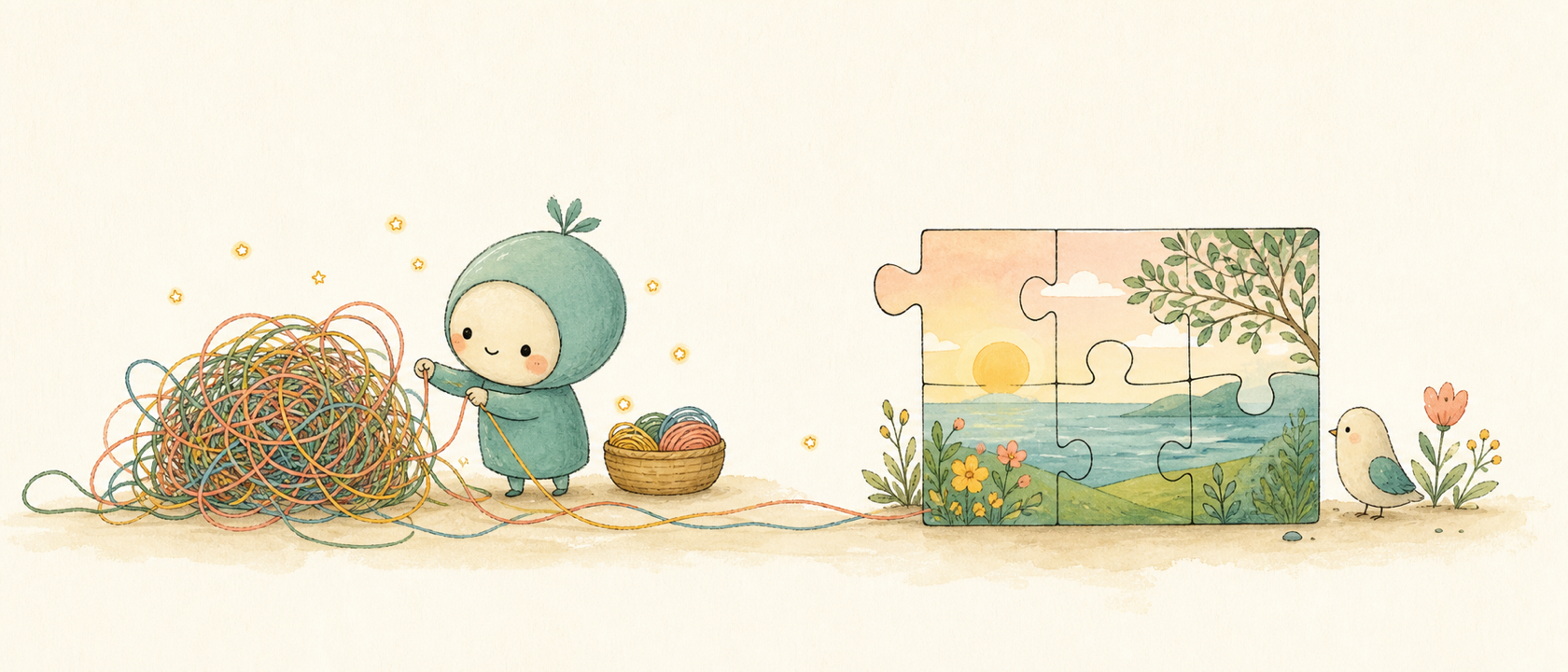
What is relationship anxiety? It is a pattern of persistent worry, self-doubt, and fear that shows up inside a romantic relationship — even when there is no obvious reason to panic. You care about your partner. Things are going reasonably well. And yet your mind keeps looping: What if they lose interest? Did that conversation mean something? Am I too needy?
This is not a flaw in how you love. It is a recognizable pattern that affects a lot of people, and it is something you can work through.
This guide explains what relationship anxiety is, what it looks and feels like, what tends to cause it, and what you can do to interrupt the cycle.
Not sure whether what you are feeling is anxiety or something else?
Take the free, confidential self-assessment to get a clearer picture of what is going on.
What Is Relationship Anxiety?
Relationship anxiety is a form of anxiety that centres specifically on your romantic partnership. It is not the same as having valid concerns about a relationship that genuinely has problems. Instead, it is the experience of frequent doubt and fear that persists even in a stable, caring relationship.
It can look like needing constant reassurance that your partner still loves you. It can look like analysing every text message for hidden meaning. It can look like a pit in your stomach when a conversation does not go quite the way you expected, or like mentally rehearsing the conversation where they break up with you — even though nothing has suggested that is coming.
Relationship anxiety is not a clinical diagnosis on its own. It is better understood as a recurring thought-and-feeling pattern that sits at the intersection of general anxiety and attachment. The National Institute of Mental Health explains that anxiety disorders involve more than occasional worry and can start to interfere with daily life. It is common, it is treatable, and naming it is already a meaningful first step.
Common Signs of Relationship Anxiety
Relationship anxiety can feel different for different people, but some patterns come up repeatedly. You might recognise a few of these:
You seek reassurance, then need it again shortly after
You ask your partner if everything is okay. They say yes. You feel better for a moment — and then the doubt creeps back. The relief never quite sticks.
You read into silences and small signals
A shorter reply than usual, a slightly flat tone on the phone, a look that seemed off. Your mind builds a case from details that probably mean nothing.
You question whether you love them “enough”
Sometimes relationship anxiety flips: instead of worrying whether your partner loves you, you fixate on whether your own feelings are strong enough, real enough, or “the right kind.”
You imagine worst-case endings
You picture them leaving. You rehearse what you would say. You feel grief for a loss that has not happened — and may not.
You feel chronically unsettled even when things are fine
There is a background hum of unease that does not seem to connect to anything specific. The relationship feels good on the surface, and yet something feels wrong.
You pull away or pick fights as a test
Some people with relationship anxiety push their partner away to see if they will come back. The logic, underneath it all, is: if they stay after this, maybe I can believe they mean it.
If several of these feel familiar, you are not alone — and this pattern has a name. Read more about what relationship anxiety feels like day to day.
What Causes Relationship Anxiety?
There is rarely one single cause. Relationship anxiety tends to develop from a combination of early experiences, thinking patterns, and how your nervous system has learned to respond to closeness.
Early attachment experiences
How your closest relationships worked in childhood — whether caregivers were consistent, emotionally available, or unpredictable — shapes how your brain expects relationships to work as an adult. If love felt conditional or inconsistent early on, your nervous system may have learned to stay on alert for signs of withdrawal, even when your current partner is not giving you any.
Past relationship wounds
Being cheated on, abandoned, or repeatedly let down by a previous partner teaches your mind and body to expect the same again. This is not irrational — it is protective. The problem is when those defences stay permanently activated in a relationship that is actually safe.
Anxious thinking patterns
Some people are naturally prone to what cognitive behavioural therapy (CBT) calls “catastrophising” — jumping quickly to the worst possible interpretation of ambiguous situations. In the context of a relationship, this makes neutral signals feel threatening. Understanding why you have relationship anxiety often involves tracing these thinking patterns back to where they first made sense.
Low self-worth
When you do not fully believe you are loveable or worthy, it is hard to accept that a partner’s love is genuine and stable. A part of you keeps waiting for them to discover their “mistake.” The anxiety is not really about them — it is about what you believe you deserve.
General anxiety that spills over
If you are someone who already tends toward anxiety in other areas of your life, it makes sense that this would show up in something as important as your closest relationship.
Feeling stuck in a loop of worry you can not seem to switch off?
Mindfulmate can help you slow it down in the moment — privately, with no appointment needed.
How to Start Interrupting the Pattern
Relationship anxiety does not disappear overnight, but there are genuine steps you can take. The goal is not to feel nothing — it is to stop being controlled by what you feel.
Name what is happening in the moment
When the spiral starts, try saying to yourself: This is anxiety, not evidence. The feeling is real. The interpretation it is selling you is not necessarily true. Naming the pattern creates a small gap between the feeling and your response to it.
Resist the reassurance loop
Seeking reassurance feels relieving in the moment, but it reinforces the anxiety over time. Each time you seek reassurance and get it, your brain learns that seeking was necessary to survive the moment — which means it does it again next time. Sitting with uncertainty for a few minutes before reaching out is harder, but it teaches your brain that you can handle the discomfort.
Track the pattern, not just the feeling
Notice when the anxiety spikes. Is it after a long day? After time apart? When you feel generally stressed about something else? Understanding your triggers is the first step toward breaking the loop.
Slow down before you react
Relationship anxiety often pushes people into actions that make things worse: picking arguments, withdrawing, demanding explanations. If you notice an anxious urge coming on, pause for 60 seconds before acting on it. Learning how to cope with anxiety in a relationship involves building exactly this kind of pause.
Talk about it — carefully
Sharing your anxiety with your partner can deepen connection, as long as it does not become a mechanism for seeking reassurance. Frame it as: I have been feeling anxious lately and I am working on it, rather than: Tell me again that you love me and are not leaving.
For a deeper guide to working through this, see How to Deal With Relationship Anxiety.
When Relationship Anxiety Needs More Support
If the anxiety is affecting your daily life, your relationship, or your sense of self-worth in significant ways, it is worth getting proper support — not just reading about it.
A therapist who uses CBT or attachment-based approaches can help you trace the roots of the anxiety and build better patterns. If traditional therapy is not immediately accessible, or if you want something between sessions, a private, on-demand conversation can help you process what is happening in the moment rather than letting it build.
Want private support you can reach any time it flares up?
Start a private conversation in the chat app you already use — judgment-free, confidential, and available 24/7.
What to Take Away
Relationship anxiety is not a sign that something is wrong with you or your relationship. It is a pattern — one that formed for understandable reasons and one that can be changed.
The key things to hold onto:
- Anxiety is a feeling, not a fact. The story it tells you is not always accurate.
- Reassurance helps short-term but feeds the cycle long-term.
- The roots are usually in old experiences, not your current relationship.
- Small behavioural shifts — naming the pattern, pausing before reacting, sitting with uncertainty — build real change over time.
- Support exists, and asking for it is not weakness.
If you are unsure where you stand, the free self-assessment is a private, no-pressure place to start.
Mindfulmate provides emotional support and guidance for everyday stress and anxiety. It is not a substitute for professional mental health treatment. If you are in crisis or need urgent support, please contact a qualified mental health professional or emergency services.