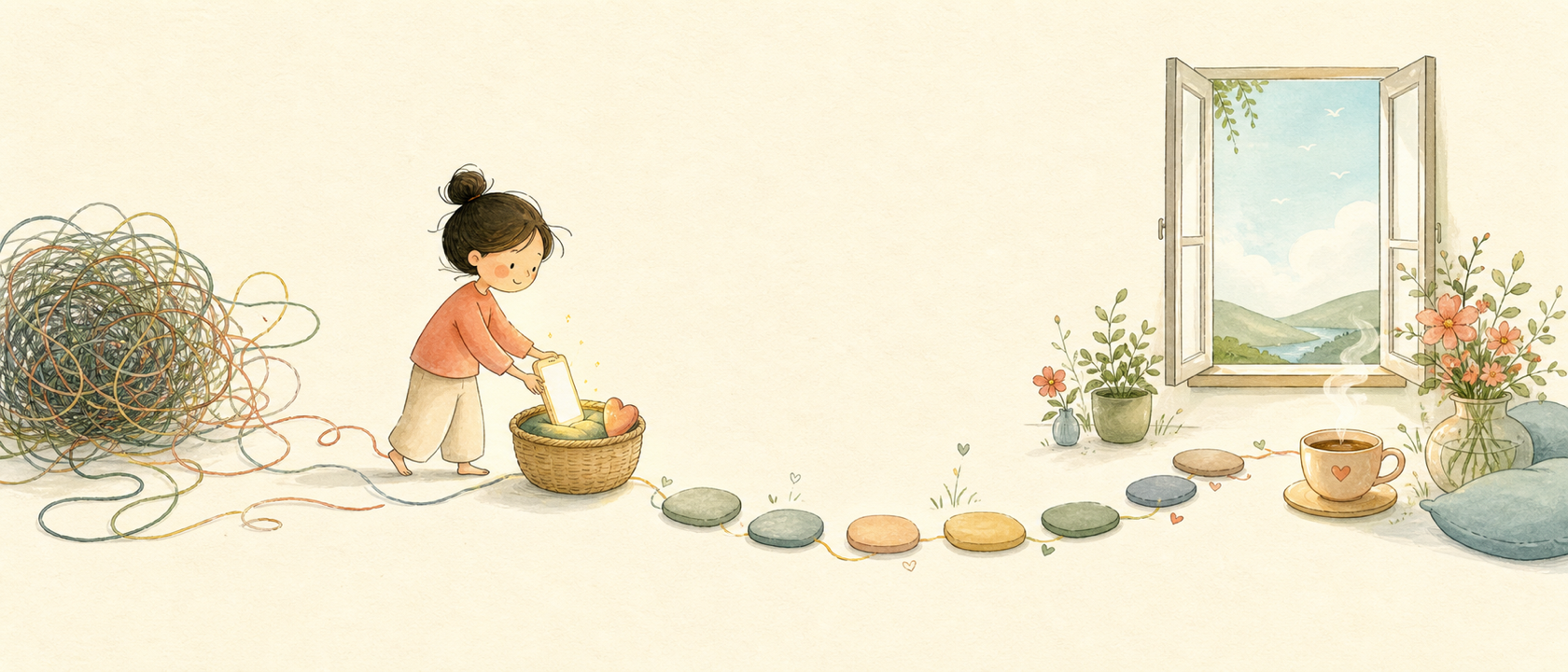
If you are wondering how to stop being anxiously attached, the goal is not to become distant, cold, or impossible to hurt. The goal is to build a pause between the trigger and the reaction.
A delayed reply can make your stomach drop. A shorter text can feel like a warning sign. A partner needing space can sound like rejection, even when part of you knows there may be another explanation.
If you are searching for how to stop being anxiously attached, you may not want to become distant or uncaring. You may just want the panic to stop running the relationship. The aim is not to shut down your needs. It is to build more space between the trigger and the reaction, so you can respond from steadiness instead of fear.
What It Means to Be Anxiously Attached
Anxious attachment is a pattern where uncertainty in a close relationship feels threatening. You may deeply want connection, but when that connection feels less certain, your body moves into alarm.
This can show up as:
- Worrying that a delayed reply means someone is losing interest
- Reading small changes in tone as proof that something is wrong
- Asking for reassurance, feeling better briefly, then needing more
- Feeling tempted to text again, check their status, or reread old messages
- Pulling away or acting cold because needing someone feels too vulnerable
If you are still learning the pattern, Mindfulmate’s guide to attachment anxiety explains the broader cycle. You may also recognize some of the signs in anxious attachment symptoms in relationships.
Anxious attachment is not a character flaw. It is often an alarm system that became sensitive around closeness, distance, inconsistency, rejection, or past hurt. The work is to stop treating every alarm as an emergency.
For external context, Cleveland Clinic describes anxious attachment style as a pattern that can involve fear of abandonment, rejection sensitivity, and a strong need for reassurance. That is why this work is about building steadier responses, not shaming yourself for wanting closeness.
How to Stop Being Anxiously Attached Without Emotional Shutdown
Many people try to fix anxious attachment by swinging to the opposite extreme. They tell themselves not to care, refuse to text first, pretend they are fine, or punish themselves for wanting reassurance.
That is often shutdown, not secure attachment. Secure action sounds more like: "I can feel anxious and still wait before responding," "I can ask for clarity without accusing," and "I can soothe myself without pretending I need nothing."
Step 1: Name the Trigger Before You Explain It
When anxious attachment gets activated, your mind will usually rush to explain the feeling.
"They are pulling away."
"I was too much."
"They found someone better."
"This always happens."
Before you believe the explanation, name the trigger.
Try this simple sentence:
"I am triggered because _____ happened."
For example:
- "I am triggered because they have not replied for four hours."
- "I am triggered because their message sounded colder than usual."
- "I am triggered because they said they need space tonight."
Naming the trigger does two useful things. First, it turns a vague emotional storm into something specific. Second, it reminds you that the feeling has a starting point. You are not just "too needy" or "too emotional." Something activated your attachment system.
Then add one grounding line: "This is a trigger. I do not have to solve the whole relationship right now."
Anxious attachment creates urgency. It makes you feel like you must text, ask, check, fix, or decide immediately. You usually do not.
Step 2: Use the 10-Minute Text Delay
If your trigger involves texting, use a 10-minute delay before you send another message.
This is not a rule that says you can never reach out. It is a short pause to keep fear from writing the message.
Here is the process:
- Write the text in Notes, not in the chat.
- Set a timer for 10 minutes.
- Put the phone face down or across the room.
- Do one physical grounding action: drink water, walk, stretch, breathe slowly, or hold something cool.
- When the timer ends, reread the message and ask, "Is this clear, kind, and useful?"
An anxious text often tries to get relief fast:
"Are you mad at me? Did I do something? Why are you ignoring me?"
After 10 minutes, you may find a clearer version:
"I noticed I am feeling a little anxious because I have not heard from you. Can you let me know when you have time to talk?"
Or you may decide not to send anything yet. Either outcome builds self-trust.
If you often feel stuck in repeat-checking or repeat-questioning, read how to stop seeking reassurance in a relationship next. It goes deeper into the reassurance loop.
Step 3: Separate Facts From Fear
Anxious attachment makes fear feel like evidence.
The thought "They are losing interest" can feel as real as the fact "They have not replied." But those are not the same thing.
Use a two-column check:
Facts
- What actually happened?
- What could a camera or screenshot prove?
- What did they directly say?
Fears
- What am I afraid this means?
- What past experience is this reminding me of?
- What story am I adding?
Example:
Fact: "They have not replied since lunch." Fear: "They are bored of me and want to leave."
Fact: "They said they want a quiet night." Fear: "They do not want to be close anymore."
Fact: "They were less affectionate after work." Fear: "I did something wrong."
This exercise is not about forcing yourself to be positive. Sometimes a relationship really does need a conversation. The point is to know whether you are responding to what happened or reacting to what you fear it means.
For broader anxiety tools, Mindfulmate’s guide on how to cope with anxiety in a relationship can help you keep the facts and feelings from blending together.
Step 4: Practice Self-Reassurance Before You Ask Again
Reassurance is not bad. Healthy relationships include care, comfort, and repair.
The problem is when reassurance becomes the only way you can feel okay. You ask. They answer. You calm down. Then the doubt returns, and you ask again. Over time, both people can feel stuck.
Before asking again, try self-reassurance.
Self-reassurance does not mean lying to yourself. It means speaking to the anxious part of you with steadiness.
Try:
- "I can feel scared without acting from fear."
- "A delayed reply is uncomfortable, but it is not proof of rejection."
- "I can wait 10 minutes and then decide what to do."
- "I have asked once. I am going to practice letting the answer count."
- "If I need clarity later, I can ask clearly."
- "My need for closeness makes sense. I can meet it with care, not panic."
You can also ask: "What reassurance am I hoping they will give me, and can I give myself part of it first?"
For example, if you want them to say, "We are okay," you might tell yourself, "I do not know everything yet, but one tense moment does not define the whole relationship."
This will not always remove the anxiety. That is not the point. The point is to reduce the pressure on the other person to be your only source of calm.
If constant reassurance feels familiar, this guide on constant reassurance in a relationship can help you understand why the relief often does not last.
A Private Pause Before You Send the Next Text
If you are in the middle of a spiral, you do not have to handle it by searching, rereading, or texting again. You can take the Mindfulmate self-assessment to reflect on your relationship anxiety, reassurance patterns, and emotional triggers. Or you can use Mindfulmate on WhatsApp for private support before sending another anxious text.
Mindfulmate is not a therapist and cannot provide diagnosis, emergency help, or crisis care.
Step 5: Ask for Clarity Without Chasing
Stopping anxious attachment does not mean never asking for reassurance or clarity. Sometimes the secure move is to communicate.
The difference is the shape of the message.
An anxiety-led message often sounds like a test, accusation, or repeated demand: "Why are you ignoring me?" or "Are we okay? Are you sure? Are you really sure?"
A secure message names the feeling, asks for what is needed, and leaves room for the other person to respond.
Try:
- "I noticed I am feeling anxious because I have not heard from you. Can you let me know when you have time to talk?"
- "I am trying not to spiral, but I would appreciate a little clarity about where we stand."
- "When plans are unclear, I get anxious. Can we decide what tonight looks like?"
- "I want to talk about this, but I also want to do it calmly. Can we check in later today?"
Clear communication protects your dignity. It lets you ask for closeness without handing fear the microphone. It also gives you information: if someone repeatedly dismisses, mocks, avoids, or punishes reasonable needs, that matters too.
Step 6: Practice One Secure Action at a Time
You do not become more secure by waiting until you never feel anxious. You become more secure by taking steadier actions while anxiety is present.
Choose one secure action per trigger.
Examples:
- Wait 10 minutes before sending another text.
- Ask one clear question instead of five anxious ones.
- Let one answer count for the rest of the evening.
- Go for a walk before checking your phone again.
- Tell the truth without blaming: "I am feeling anxious and could use clarity."
- Keep your evening plans instead of cancelling everything to monitor the relationship.
- Notice when a relationship pattern is genuinely unhealthy, not just uncertain.
Do Not Confuse Secure With Silent
One common mistake is thinking the only choices are anxious pursuit or total silence.
You either send six texts, or you say nothing and pretend you are fine. You either ask for reassurance over and over, or you decide you are not allowed to need anything.
There is a middle path. You can pause and still communicate. You can self-soothe and still ask for repair. You can care deeply and still keep your self-respect.
This matters because not every anxious reaction is only an inner pattern. Sometimes anxiety gets louder when the other person is unreliable, emotionally unavailable, dishonest, or hot and cold.
Your job is not to self-soothe your way into accepting poor treatment. Your job is to slow down enough to see clearly.
Ask:
- "Is this fear mostly coming from my past, or from this person’s current behavior?"
- "Do they respond to reasonable needs with care?"
- "Am I asking for reassurance, or am I asking for basic respect?"
These questions help you stay honest. Secure attachment includes self-soothing, but it also includes paying attention to the relationship you are actually in.
When to Get Extra Support
Consider working with a licensed mental health professional if attachment anxiety feels overwhelming, compulsive, trauma-linked, or disruptive to sleep, work, eating, self-worth, or daily life.
If you feel at risk of harming yourself, unsafe with another person, or in immediate danger, contact local emergency services or a crisis line now.
Mindfulmate is not therapy, diagnosis, crisis support, or emergency care. It is a private AI mental wellness companion for reflection, emotional support, and in-the-moment guidance. It should not replace professional help when professional help is needed.
A Steadier Way to Stay Connected
Learning how to stop being anxiously attached is not about needing less love. It is about needing closeness without abandoning yourself.
Start small.
Name the trigger. Wait 10 minutes before sending the text. Separate facts from fear. Offer yourself one sentence of reassurance. Ask clearly instead of chasing. Choose one secure action.
You may still feel anxious. That is okay. Progress often looks like feeling the old alarm and choosing a new response.
The next time you want to send another anxious text, pause and ask:
"What would help me feel steady for the next 10 minutes?"
If you want support with that pause, take the Mindfulmate self-assessment or start a private reflection with Mindfulmate on WhatsApp. You do not have to solve the whole relationship in one message. You just need one calmer next step.