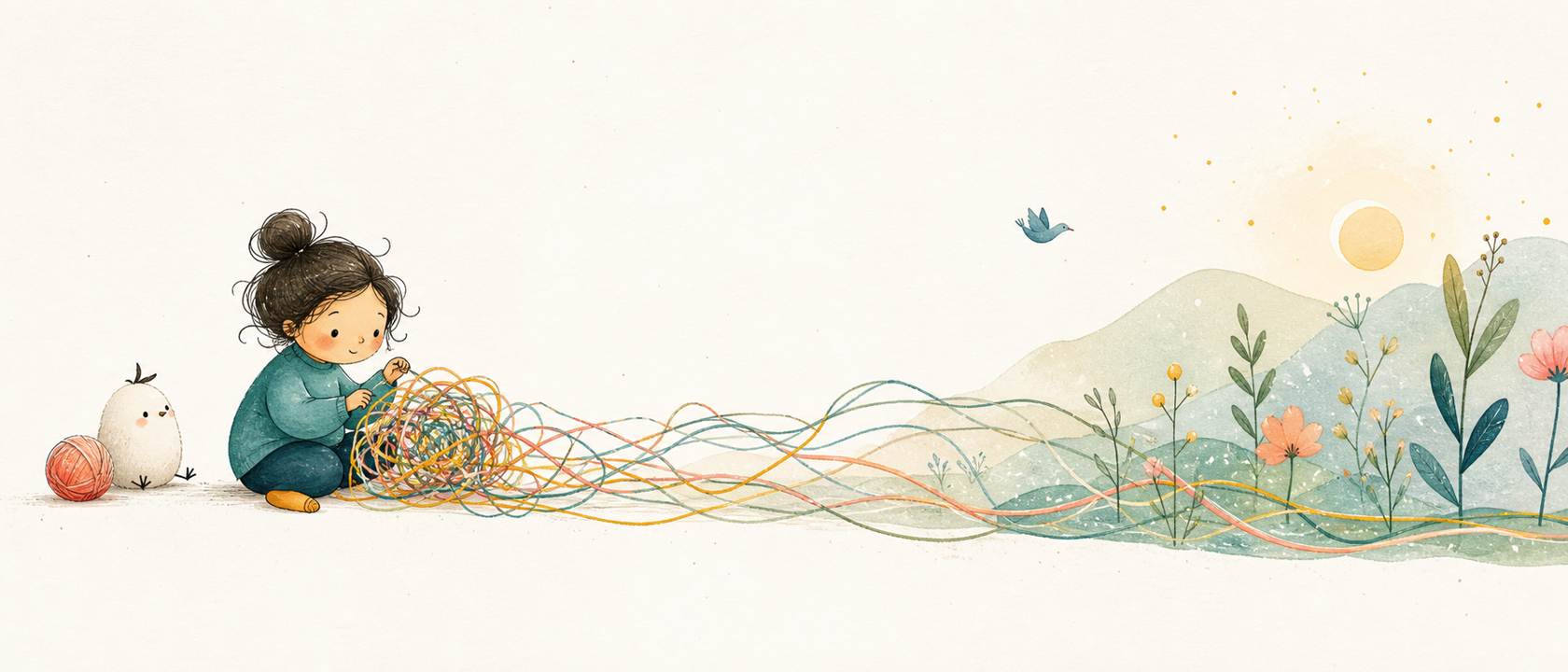
Attachment anxiety can make ordinary relationship moments feel loaded with threat.
A delayed text feels like rejection. A quieter tone feels like distance. A small disagreement turns into a fear that the whole relationship is in danger. Even when part of you knows you may be overthinking, another part wants reassurance right now.
If that sounds familiar, you are not broken, needy, or too much. You may be noticing a pattern of attachment anxiety.
This guide explains what attachment anxiety is, common symptoms, why it can develop, how it overlaps with relationship anxiety, and what can help you feel steadier in the moment.
What Is Attachment Anxiety?
A simple attachment anxiety definition is this: attachment anxiety is a relationship pattern where closeness, distance, uncertainty, or conflict can trigger a strong fear of rejection or abandonment.
It is not a diagnosis. It is a way your mind and body may respond when connection feels uncertain.
Someone with an anxious attachment style may deeply value closeness and emotional safety. When they sense distance, their nervous system can react as if something serious is wrong.
For external context, Cleveland Clinic describes anxious attachment style as a pattern that can involve fear of abandonment, rejection sensitivity, and a strong need for reassurance.
Attachment anxiety often shows up as a loop:
- Something feels uncertain.
- Your mind searches for signs that the relationship is unsafe.
- Your body becomes activated.
- You seek reassurance, check, analyze, text again, or try to fix the feeling quickly.
- You feel calmer for a while.
- The anxiety returns when a new uncertainty appears.
Attachment Anxiety Guide Map
Use this page as the starting point. If you want a more specific next step, these guides go deeper into the most common attachment anxiety patterns:
- What Is Anxious Avoidant Attachment? explains the push-pull loop that can happen when one person reaches for closeness while the other pulls away to feel safe.
- How to Stop Being Anxiously Attached focuses on practical steps for anxious texting, self-reassurance, clearer communication, and small secure actions.
- CBT for Anxious Attachment shows how to use thought records, reframes, and small behavioral experiments when the attachment alarm gets loud.
Together, these pages move from understanding the pattern to choosing a steadier next step in the moment.
Common Attachment Anxiety Symptoms
Attachment anxiety symptoms can look different from person to person. For some people, it is loud and obvious. For others, it happens internally while they appear calm on the outside.
Common signs include:
- Feeling panicked or unsettled when someone takes longer than usual to reply
- Reading into tone changes, short messages, silence, or canceled plans
- Needing frequent reassurance that the relationship is okay
- Worrying that you are too much, not enough, or about to be replaced
- Feeling a strong urge to text again, explain more, check in, or ask where things stand
- Replaying conversations to look for hidden meaning
- Feeling relieved after reassurance, then anxious again later
- Getting emotionally flooded during conflict or distance
- Struggling to believe affection unless it is repeatedly confirmed
- Comparing yourself to exes, friends, coworkers, or people on social media
These patterns often have one thing in common: uncertainty feels hard to tolerate. The mind tries to solve the discomfort by finding certainty, but relationships always include some uncertainty.
That does not mean reassurance is bad. Healthy reassurance can be part of a caring relationship. The problem starts when reassurance becomes the only way to feel safe.
If reassurance has become a repeated loop, this may connect with reassurance seeking in a relationship.
A Soft Check-In
If these patterns feel familiar, pause and ask: What usually triggers this feeling? Does reassurance help me feel grounded, or does it only calm me briefly? Do I want clarity, closeness, comfort, or control right now?
You can also take the MindfulMate self-assessment if you want a private way to reflect on relationship anxiety, reassurance loops, and emotional patterns.
What Attachment Anxiety Feels Like in Relationships
Anxious attachment in relationships is not just a thought pattern. It can feel physical, emotional, and urgent.
You might feel it in your chest, stomach, jaw, or shoulders. You might notice a rush of heat, a sinking feeling, or a restless need to do something. Your mind may move quickly:
- "They are losing interest."
- "I said something wrong."
- "They are mad at me."
- "I should text again."
- "If I do not fix this now, it will get worse."
- "Maybe my gut is telling me something."
For example, your partner may be busy, tired, or distracted. But if attachment anxiety is active, silence may feel like proof that they are pulling away. A normal request for space may feel like abandonment.
That is why attachment anxiety can overlap with what relationship anxiety feels like. Both can involve racing thoughts, uncertainty, reassurance seeking, and a strong need to know whether everything is okay.
What Causes Attachment Anxiety?
Attachment anxiety does not come from one single source. It can develop through a mix of past experiences, current dynamics, stress, and learned coping patterns.
Inconsistent Emotional Availability
If care, attention, or affection felt unpredictable in earlier relationships or family experiences, your system may have learned to stay alert for signs that connection could disappear.
This does not mean your past determines your future. It means your mind may be trying to protect you based on what it learned before.
Past Rejection, Betrayal, or Abandonment
Being cheated on, ghosted, suddenly left, or emotionally dismissed can make future uncertainty feel more threatening.
Low Self-Trust
Attachment anxiety can grow when you do not trust yourself to handle rejection, conflict, or disappointment. The fear becomes not only "What if they leave?" but also "What if I cannot cope?"
Unclear Communication
Mixed signals, inconsistent communication, secrecy, avoidance, or repeated broken promises can create real uncertainty. Sometimes the feeling is a personal trigger. Sometimes it is information about the relationship.
Stress Outside the Relationship
Burnout, work pressure, loneliness, low mood, sleep loss, or major life changes can reduce your emotional bandwidth. When you are already stretched, relationship uncertainty may feel harder to tolerate.
For a broader look at possible drivers, see Why Do I Have Relationship Anxiety?.
Attachment Anxiety vs. Relationship Anxiety
Attachment anxiety and relationship anxiety are closely related, but they are not always the same thing.
Attachment anxiety is often about emotional safety, closeness, abandonment, and whether the bond feels secure. It tends to focus on questions like:
- "Are they pulling away?"
- "Do they still care?"
- "Am I too much?"
- "Will they leave?"
- "Can I trust this connection?"
Relationship anxiety can include those fears, but it may also involve doubts about compatibility, attraction, the future, values, or whether the relationship is "right." It may sound like:
- "What if I am with the wrong person?"
- "What if I do not love them enough?"
- "What if this doubt means something?"
- "What if I never feel certain?"
These patterns can overlap. A person can have an anxious attachment style and also experience relationship anxiety.
If you are trying to understand the bigger picture, start with What Is Relationship Anxiety?.
What Helps With Attachment Anxiety?
The goal is not to shame yourself into being less anxious. The goal is to build enough steadiness that anxiety does not run the relationship.
1. Name the Trigger
Before reacting, try to name what happened in simple terms.
Instead of "They do not care about me," try:
"They have not replied for three hours, and that triggered my fear of being ignored."
This separates the fact from the story. The fact may be a delayed reply. The story may be abandonment, rejection, or proof that you are not important.
2. Regulate Before You Seek Reassurance
When your body is activated, reassurance can feel urgent. But if you ask while panicked, you may ask in a way that creates more tension, or need the same reassurance again soon after.
Try a short reset first:
- Put both feet on the floor.
- Breathe out longer than you breathe in.
- Name five things you can see.
- Take a short walk.
- Write the message in your notes app before sending it.
- Ask, "What am I feeling, and what do I need?"
You are not ignoring your need. You are giving yourself a better chance to express it clearly.
3. Watch the Reassurance Loop
Reassurance can be loving and healthy. But when it becomes repeated checking, it may keep the anxiety cycle alive.
For example:
- You feel anxious.
- You ask, "Are we okay?"
- Your partner says yes.
- You feel relief.
- Your mind asks, "But what if they only said that to be nice?"
- You ask again, in a different way.
If this happens often, read How to Stop Seeking Reassurance in a Relationship for more practical steps.
4. Ask for What You Need Clearly
Clear communication is different from anxious protest.
An anxious protest might sound like:
"You never care about me. I guess I am not important."
A clearer request might sound like:
"I am feeling a little activated because we have not talked much today. Could we check in later tonight?"
Or:
"I am working on not spiraling, but a quick bit of clarity would help. Are we okay after earlier?"
The goal is not to hide your needs. The goal is to express them clearly.
5. Build Tolerance for Uncertainty
Secure connection does not mean you always feel certain. It means uncertainty does not control every choice.
You can practice this in small ways:
- Wait 10 minutes before sending a follow-up text.
- Do one grounding exercise before asking for reassurance.
- Let a harmless uncertainty remain unresolved for a little while.
- Remind yourself, "I can feel anxious and still choose a grounded response."
6. Strengthen Self-Trust
Attachment anxiety often says, "I need them to prove I am safe."
Self-trust says, "Connection matters, and I can support myself through uncomfortable moments too."
Self-trust can grow through small commitments: keeping promises to yourself, caring for your body when anxiety spikes, asking for support without abandoning your own needs, and choosing relationships where care is consistent.
The point is not to become perfectly independent. Healthy relationships need closeness, care, and repair. The point is to know that your steadiness does not depend entirely on someone else’s immediate response.
When to Get Extra Support
Attachment anxiety can improve with awareness, practice, and supportive relationships. But extra help may be important if anxiety is affecting your sleep, work, appetite, mood, self-worth, or ability to communicate.
Consider reaching out to a licensed mental health professional if relationship anxiety feels overwhelming or constant, past trauma keeps resurfacing, conflict becomes intense or unsafe, or you feel trapped in patterns that harm you or the relationship.
MindfulMate is not therapy, a diagnosis tool, or crisis care. If you feel unsafe or may harm yourself, contact local emergency services or a crisis support line right away.
For everyday spirals, reflection, and in-the-moment grounding, MindfulMate can offer private support through familiar chat tools like WhatsApp and Telegram. It can help you slow down, name what is happening, and choose a steadier next step.
A Steadier Way to Respond
Attachment anxiety can make love feel fragile, uncertain, and urgent. But the fact that you feel anxious does not mean you are failing at relationships. It means your system is asking for safety.
You can learn to notice the trigger, calm your body, separate facts from fears, ask for reassurance in a healthier way, and build trust in yourself over time.
If attachment anxiety, reassurance loops, or relationship spirals feel familiar, take the MindfulMate self-assessment. It is a private way to reflect on what you are experiencing and find a more grounded next step.