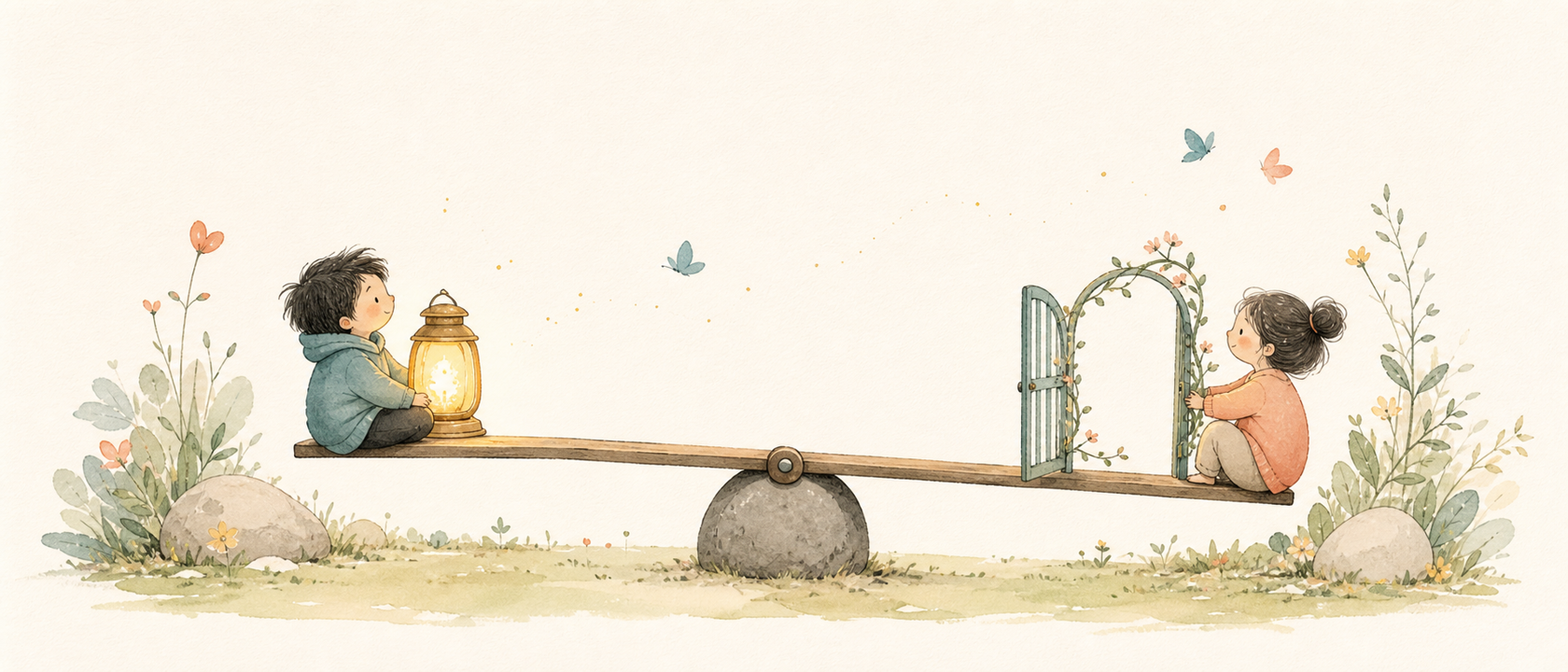
An avoidant and anxious relationship can feel confusing from both sides.
One person may want closeness, reassurance, and a conversation right now. The other may feel overwhelmed, shut down, and need space before they can respond. The more one partner reaches, the more the other pulls back. The more one partner pulls back, the more urgent the other person’s anxiety becomes.
This is often called the anxious avoidant relationship cycle. It is not about one partner being “too needy” or the other being “too cold.” It is a pattern where two different ways of protecting emotional safety accidentally trigger each other.
What an Avoidant and Anxious Relationship Can Look Like
In an avoidant and anxious attachment dynamic, one partner often feels safer through closeness, clarity, and frequent connection. The other often feels safer through space, independence, and time to process.
The anxious partner may think, “Why are they pulling away?” or “I need reassurance before I can calm down.” The avoidant partner may think, “This is too much” or “I need room to think.”
For a broader grounding in the main attachment patterns, Cleveland Clinic’s guide to attachment styles explains how secure, anxious, avoidant, and disorganized attachment can shape adult relationships.
Neither response is automatically wrong. Wanting closeness is human. Needing space is human. The problem begins when each partner’s coping style feels threatening to the other.
The anxious partner may interpret space as rejection. The avoidant partner may interpret pursuit as pressure. Both people may be trying to feel safe, but the pattern makes both feel less safe.
What Is the Anxious Avoidant Relationship Cycle?
The anxious avoidant relationship cycle is a repeating push-pull pattern.
It often starts with a trigger. Maybe one partner takes longer than usual to reply. Maybe there is a tense conversation. Maybe one person asks, “Are we okay?” and the other gives a short answer.
From there, the loop can move quickly:
- One partner senses distance or uncertainty.
- Anxiety rises, and they seek reassurance or immediate answers.
- The other partner feels pressured and pulls back.
- The withdrawal increases the first partner’s anxiety, and the cycle intensifies.
This cycle can happen over text, during conflict, after plans change, or when one partner needs more emotional availability than the other can offer in the moment.
It can also create a painful rhythm: rupture, chase, withdrawal, relief, reconnection, then the same pattern again.
Why the Push-Pull Loop Happens
The push-pull loop usually happens because both partners are reacting to perceived danger.
For the anxious partner, danger may feel like abandonment, rejection, emotional distance, silence, or unclear commitment. Their body may treat uncertainty as something that needs to be solved immediately.
For the avoidant partner, danger may feel like pressure, loss of autonomy, criticism, emotional intensity, or the fear that they will be trapped in a conversation they cannot handle.
That is why the cycle can feel so intense. One person’s attempt to get safe can make the other person feel unsafe.
The anxious partner may see withdrawal as a sign they are right to worry. The avoidant partner may see anxious pursuit as proof they need more space. Both interpretations can harden the cycle.
This can overlap with relationship anxiety, especially when uncertainty turns into repeated checking, reassurance seeking, or fear that the relationship is about to end.
Common Signs of an Anxious and Avoidant Attachment Relationship
Every relationship is different, but an anxious and avoidant attachment relationship often includes some of these patterns.
- One partner wants to talk immediately, while the other needs time.
- Reassurance gives short-term relief, but the same fear returns.
- Texting becomes emotionally loaded, especially delayed replies, shorter messages, or changes in tone.
- Conflict turns into a chase and retreat pattern.
- Short reconnections are followed by the same loop.
- Both partners feel misunderstood, pressured, or emotionally unsafe.
The anxious partner may ask for reassurance, feel better for a while, then need it again when the next trigger appears. This can become exhausting for both people. If this is familiar, it may help to read more about reassurance seeking in a relationship.
Is It Anxiety, Intuition, or a Real Problem?
In an avoidant and anxious relationship, it can be hard to tell the difference between a real relationship issue and an anxiety-driven interpretation.
Anxiety often speaks in urgent, absolute language:
- “They are pulling away, so they must not love me.”
- “If we do not fix this now, the relationship is over.”
- “I feel scared, so something must be wrong.”
Intuition and valid concern usually become clearer when the body is calmer. If you are trying to understand whether fear is protecting you or spiraling, this guide on when anxiety sounds like intuition in a relationship can help.
This does not mean you should ignore real problems. Dishonesty, disrespect, repeated emotional unavailability, manipulation, or unsafe behavior should be taken seriously. The point is to slow the loop enough to see what is happening.
How to De-Escalate the Cycle in the Moment
When the push-pull loop starts, the first goal is not to solve the entire relationship. The first goal is to stop making the moment worse.
1. Name the pattern, not the person
Instead of saying, “You always run away” or “You are too much,” try naming the cycle:
- “I think we are in our chase-and-retreat pattern.”
- “I am feeling anxious, and I can tell you need space.”
This shifts the focus from blame to teamwork.
2. Use time-bound space
Space feels less threatening when it has a return point. Instead of disappearing or demanding immediate resolution, try:
- “I need 30 minutes to calm down, and then I will come back.”
- “I want to talk about this. I just need a little time first.”
For the anxious partner, this gives reassurance that space is not abandonment. For the avoidant partner, it gives room without making the other person feel erased.
3. Pause before sending another message
If you feel the urge to send one more text, ask:
- “Am I asking for clarity or reassurance?”
- “What do I need right now?”
If reassurance seeking has become a repeated loop, this guide on how to stop seeking reassurance in a relationship gives deeper steps.
4. Regulate before you explain
Trying to explain yourself while activated can make the conversation more intense. Before you continue, give your body a signal that you are not in immediate danger:
- Put both feet on the floor and name five things you can see.
- Take a slow walk without drafting a message.
- Breathe out longer than you breathe in.
For more practical tools, see how to cope with anxiety in a relationship.
If this pattern feels familiar, the MindfulMate self-assessment can help you reflect on what tends to trigger your anxiety, reassurance needs, or shutdown patterns. It is a private way to slow down and understand what may be happening before the next spiral takes over.
How Both Partners Can Build a Safer Pattern Over Time
The anxious avoidant relationship cycle can change, but it usually changes through repeated small repairs, not one perfect conversation. During a calmer moment, agree on a basic repair plan:
- What helps when one person feels anxious?
- What helps when one person feels overwhelmed?
- How long is a fair pause before returning to the conversation?
- What words mean “I need space, but I am not leaving” or “I need reassurance, but I am trying not to pressure you”?
A shared plan gives both partners something to reach for when old instincts take over.
Make space predictable
Avoidant partners often need room to process. That can be healthy. But vague space can feel like abandonment to an anxious partner. Try making space specific:
- “I need an hour.”
- “I am going for a walk, then I will text you.”
- “I care about this conversation. I cannot do it well while I am flooded.”
Make reassurance clear and limited
Anxious partners often need connection. That can be healthy too. But repeated reassurance can become a cycle that never fully satisfies the fear. Try making reassurance specific:
- “I care about you, and I need a little time before we talk.”
- “I am upset, but I am not ending the relationship tonight.”
- “I want to understand you. I just need us to slow down.”
Practice asking for needs without protest behavior
Protest behavior is anything meant to get closeness through pressure, testing, punishment, or threat. Instead, name the need directly:
- “I need clarity.”
- “I need a check-in.”
- “I need a little reassurance, and I am trying to ask for it calmly.”
Notice whether both people are willing to work on the pattern
A relationship can only become safer if both people are willing to look at their side of the loop. That does not mean both partners will change at the same speed. But over time, there should be some evidence of effort: clearer communication, cleaner pauses, fewer threats, faster repairs, and more care during conflict.
If only one person is trying, the pattern may stay painful.
When to Get Extra Support
Extra support can help when the cycle feels bigger than both of you. Consider professional support if conflict feels persistent, overwhelming, trauma-linked, or hard to manage without repeated ruptures.
MindfulMate is not a replacement for therapy, diagnosis, medical care, or crisis support. It can be a private place to pause, reflect, and sort through anxious thoughts before reacting. For urgent safety concerns or risk of harm, contact local emergency services or a crisis support line in your area.
A Calmer Way to See the Pattern
An avoidant and anxious relationship is not a simple story where one person is wrong and the other is right.
It is often two people trying to protect themselves in opposite ways. One reaches for closeness to feel safe. One reaches for space to feel safe. Then closeness starts to feel like pressure, and space starts to feel like rejection.
That loop can feel automatic, but it is not impossible to interrupt. Start by naming the cycle. Use time-bound space. Ask for reassurance clearly. Regulate before reacting. Come back to the conversation when both people have more capacity.
If the pattern keeps repeating, take it seriously. You do not have to figure it out in the middle of a spiral.
Take the MindfulMate self-assessment for a private way to reflect on your relationship anxiety, reassurance patterns, and support needs. It can help you understand what gets triggered and what kind of next step may help you feel steadier.