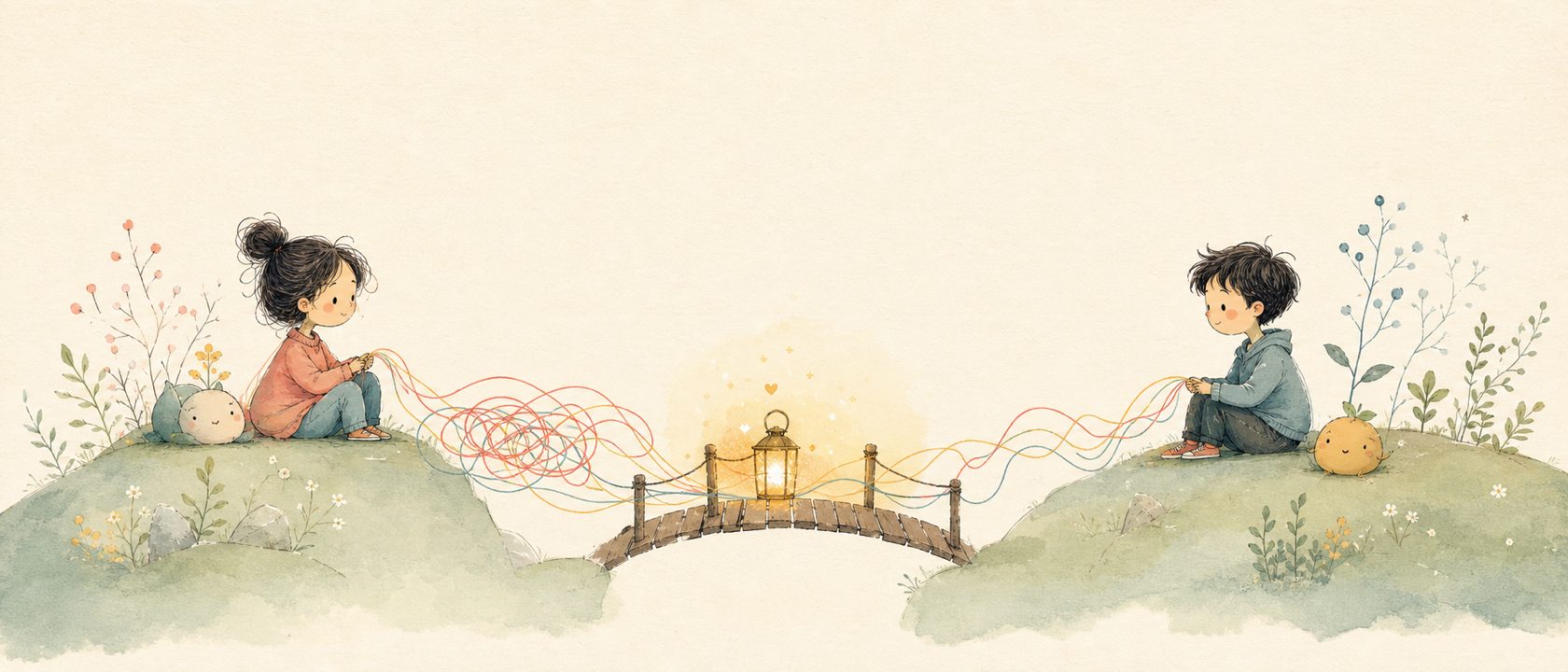
What is anxious avoidant attachment? In everyday language, it often describes a relationship pattern where one person reaches for closeness while the other pulls back to feel safe.
It can look like this: one partner notices a shorter text, a delayed reply, or a slight change in tone. Their body reacts as if connection is at risk. They ask for reassurance, send another message, or try to talk right now. The other partner feels pressured, overwhelmed, or criticized, so they need space. That space makes the first person’s fear louder.
This is the push-pull loop.
Strictly speaking, anxious attachment and avoidant attachment are different attachment patterns. "Anxious avoidant attachment" is not always a formal standalone label. Most people use the phrase to describe a relationship dynamic where anxious and avoidant coping styles keep triggering each other.
For background on the anxious side of the cycle, Cleveland Clinic describes anxious attachment style as a pattern that can involve fear of abandonment, rejection sensitivity, and a strong need for reassurance.
The important part is not the label. It is understanding the loop while it is happening, so you can stop turning fear into another rupture.
What Is Anxious Avoidant Attachment in Relationships?
In an anxious avoidant relationship, both people may be trying to protect themselves.
The anxious partner often feels safer through closeness, clarity, and reassurance. They may want to talk quickly because uncertainty feels unbearable. They might think, "If we can just talk, I will calm down."
The avoidant partner often feels safer through space, independence, and time to process. They may pull back because emotional intensity feels too fast or too demanding. They might think, "If I can just get some room, I will calm down."
Neither need is automatically wrong. Wanting closeness is human. Needing space is human. The problem begins when each person’s way of calming down makes the other person feel less safe.
The anxious person may experience space as rejection.
The avoidant person may experience pursuit as pressure.
Then both people react harder. One reaches. One withdraws. The cycle starts to feel like proof that the relationship is unsafe.
If you relate more to the anxious side, you may also want to read about attachment anxiety and anxious attachment symptoms in relationships. Those patterns often overlap with this push-pull dynamic.
The Push-Pull Loop in Real Life
The anxious avoidant relationship cycle rarely starts with a dramatic fight. It usually starts with a small moment that means different things to each person.
The texting loop
You send a message. They do not reply for a few hours.
Your mind starts filling in the blanks: "They are losing interest. I said too much. They are pulling away again."
You send a follow-up text. Maybe you make it casual. Maybe you ask, "Are we okay?" Maybe you tell yourself you are only checking in, but underneath it you are trying to stop the panic.
They see the extra message and feel tense. To them, it may feel like pressure to respond perfectly. They wait longer because they do not want to say the wrong thing.
Now the silence feels even worse.
The conflict loop
You bring up something that hurt you. You want connection, repair, and reassurance that the relationship is okay.
They hear criticism. Their nervous system says, "This conversation is too much." They get quiet, defensive, distracted, or physically leave the room.
You see their shutdown and feel abandoned. You push harder because the distance feels dangerous. They shut down more because the intensity feels dangerous.
Both people may leave the conversation thinking, "They do not care about how I feel."
The space loop
The avoidant partner says, "I need space."
The anxious partner hears, "I am leaving."
The anxious partner asks how much space, why they need it, what it means, and whether the relationship is still okay. The avoidant partner feels trapped by the questions, so they become vague or unavailable. The anxious partner gets more scared because the space has no shape.
This is why time-bound space matters. "I need an hour, and I will text you at 7" lands differently from "I just need space."
Why the Cycle Feels So Hard to Stop
Anxious avoidant attachment patterns can feel automatic because they happen in the body before they become thoughts.
For the anxious person, distance can feel like alarm. The body may treat an unanswered text or quiet tone as a sign of abandonment. Even if part of them knows they might be overthinking, the fear still feels urgent.
For the avoidant person, closeness during conflict can feel like threat. The body may treat repeated questions, emotional intensity, or requests for reassurance as a loss of control. Even if part of them wants to care, the pressure still feels overwhelming.
That is why logic alone does not always fix the pattern. You can know the cycle is happening and still want to send another message. You can know your partner is hurting and still want to disappear.
The work is not to shame either reaction. The work is to create a pause between the trigger and the next move.
If this loop is tied to repeated checking, reassurance, or fear that the relationship is about to end, this may also connect with relationship anxiety or reassurance seeking in a relationship.
Is It Attachment, Anxiety, or a Real Relationship Problem?
This is the part many articles skip: not every painful relationship pattern is "just attachment."
Sometimes the loop is mostly about fear, old experiences, nervous system habits, or communication styles. Sometimes there are real problems that need to be addressed, such as dishonesty, repeated disrespect, emotional unavailability, manipulation, or unsafe behavior.
A useful question is:
When we are both calmer, is there willingness to repair?
Look for patterns over time, not one perfect conversation. Does the anxious partner ask for reassurance more directly instead of testing or spiraling? Does the avoidant partner make space clearer instead of disappearing or dismissing the other person’s feelings?
If both people can name the cycle and take small responsibility for their side, the pattern has room to change.
If one person uses "attachment style" as an excuse to ignore your needs or avoid accountability, that is different. Understanding attachment should make the relationship more honest, not more blurry.
How to Slow the Push-Pull Loop
You do not need to solve the whole relationship in the middle of a trigger. Start smaller. The first goal is to make the next ten minutes less damaging.
1. Name the cycle before naming the fault
Try saying:
- "I think we are in the push-pull loop."
- "I am feeling anxious, and I can tell you need space."
- "I want to talk, but I do not want us to make this worse."
This shifts the moment from "you are the problem" to "this pattern is happening again."
2. Make space specific
If you need space, give it a return point.
Try:
- "I need 30 minutes to calm down, then I will come back."
- "I care about this. I cannot talk well while I am flooded."
- "I am not leaving the relationship. I need a pause before we continue."
Specific space helps the avoidant person breathe without leaving the anxious person guessing.
3. Ask for the need underneath the protest
Anxious protest can sound like accusation, repeated texting, checking, or asking the same question in different ways. Underneath it, there is often a simple need: clarity, reassurance, repair, or steadiness.
Instead of "Why are you being so distant?" try:
- "I am feeling scared and could use a clear check-in."
- "Can you tell me when we will talk about this?"
- "I need reassurance, and I am trying to ask without pressuring you."
This gives the other person something real to respond to.
4. Do one regulating action before the next message
When you feel the urge to send one more text, pause for one small action first.
Put your phone down for two minutes. Breathe out slower than you breathe in. Write the message in your notes app without sending it. Ask, "Am I trying to communicate, or am I trying to make the anxiety stop?"
That question can create enough space to choose a steadier next move.
If you need a private place to reflect before reacting, take the Mindfulmate self-assessment or use Mindfulmate on WhatsApp for calm, in-the-moment support. Mindfulmate can help you sort through what you feel, what you need, and what might be worth saying before the spiral writes the message for you.
What Helps the Anxious Partner
If you are usually the one reaching, your fear may feel like a command: fix this now.
Try to slow down enough to separate a real request from an anxiety-driven demand.
Helpful questions:
- What exactly happened?
- What story am I adding to it?
- What do I need to know now, and what can wait?
- Have I already asked for reassurance today?
- Would another text create clarity, or would it keep the loop alive?
This does not mean you should pretend you have no needs. You are allowed to need consistency, warmth, follow-through, and repair. The goal is to ask in a way the relationship can respond to.
What Helps the Avoidant Partner
If you are usually the one pulling back, your need for space may feel like survival.
The key is to take space without making the other person feel erased.
Helpful phrases:
- "I need a pause, not an exit."
- "I want to respond well, and I need time."
- "I will come back to this tonight."
- "I know silence can feel scary. I am taking space so I do not react badly."
You do not have to process everything instantly. But if you disappear, give vague answers, or treat connection as unreasonable, the cycle will likely intensify.
Can an Anxious Avoidant Relationship Work?
An anxious avoidant relationship can become healthier when both people are willing to notice the pattern and practice new responses.
It usually does not change because of one big talk. It changes through repeated small repairs:
- clearer pauses
- fewer threat-based texts
- more direct asks
- faster repair after conflict
- less mind reading
- more predictable follow-through
The relationship also needs enough basic safety. If conflict includes intimidation, coercion, threats, repeated betrayal, or fear for your wellbeing, attachment tools are not enough. In those cases, professional or crisis support may be more appropriate.
Safety Note: What Mindfulmate Can and Cannot Do
Mindfulmate is not therapy, diagnosis, crisis support, emergency care, or a replacement for a licensed mental health professional. It can offer private reflection, emotional support, and CBT-style prompts for everyday stress, relationship anxiety, and difficult moments.
If you might hurt yourself or someone else, feel unsafe, or need urgent help, contact local emergency services or a crisis line in your area.
A Calmer Way to Understand the Loop
So, what is anxious avoidant attachment?
In everyday language, it is the push-pull pattern that happens when one person reaches for closeness to feel safe and the other reaches for distance to feel safe. The tragedy is that both people may be trying to protect the relationship, but their protective moves scare each other.
You do not have to solve your entire attachment history today. Start with the next moment.
Name the loop. Make space specific. Ask for the real need. Regulate before sending another message. Look for willingness to repair when both people are calmer.
If this pattern keeps showing up in your relationship, take it seriously and support yourself before the next spiral takes over. Start with the Mindfulmate self-assessment for private reflection, or open Mindfulmate on WhatsApp when you need help slowing down what you feel before deciding what to say.