New relationship anxiety is the unsettled, often relentless worry that shows up in the early weeks or months of a romance — not because something is wrong, but because something matters. You like this person. Things are going well. And yet you are over-reading their texts, bracing for the conversation that ends it, and feeling a kind of dread that seems to contradict how much you are enjoying this.
That contradiction is the hallmark of new relationship anxiety. It does not mean the relationship is wrong. It means your nervous system is running an old programme in new circumstances.
Not sure whether what you are feeling is anxiety or a warning sign?
Take the free, confidential self-assessment to get a clearer picture of what is happening.
What New Relationship Anxiety Actually Is
New relationship anxiety is distinct from general relationship anxiety, though the two overlap. General relationship anxiety can persist for years inside an established relationship. New relationship anxiety is specifically driven by the conditions of the early stage: genuine uncertainty, limited history, and a lot riding on every small interaction.
In those first weeks, you do not really know this person yet. They do not know you. Nothing has been tested. There are no shared memories to anchor to, no proof that they stay when things get hard, no pattern of repair after a difficult moment. That absence of evidence is not a bad sign — it is just where new relationships start. But for an anxious mind, the absence of certainty reads like danger.
The anxiety can sit alongside genuine excitement. That is what makes it confusing. People expect the beginning of a relationship to feel purely good, and when it does not — when there is a persistent hum of worry beneath the happiness — they assume the worry means something. Often it does not. It is just what it feels like to care about something you have not secured yet.
Why New Relationships Trigger Anxiety
The uncertainty is objectively higher at the start
Early dating is structurally uncertain in ways that later stages are not. You are still forming impressions of each other. Patterns have not settled. You do not know if this person is consistent, how they handle conflict, whether what they show you now is who they really are. That uncertainty is not a failure of the relationship — it is a feature of newness. But it gives an anxious brain a great deal to work with.
Hope makes you more vulnerable
The moment you start to want something to work, you have something to lose. Early-stage anxiety often spikes precisely because things are going well. The better it feels, the more there is at stake. Your brain, trying to protect you, starts scanning for threats — not because threats exist, but because the potential loss would hurt.
Excitement and threat feel similar in the body
Your nervous system does not have a clean way to separate "uncertain in a thrilling way" from "uncertain in a dangerous way." Both produce a version of the same state: elevated heart rate, heightened attention, an edge of vigilance. What you are calling anxiety might partly be arousal that your mind is labelling as worry because the situation also carries risk. The National Institute of Mental Health explains that anxiety is the body’s reaction to stress and can show up even when there is no current threat. That does not make the feeling less uncomfortable, but it does mean the physical sensation is not always a reliable guide to what is actually happening.
Past experiences come online early
If a previous relationship ended without warning — if someone seemed interested and then pulled away, if you were left without explanation — your brain catalogued that pattern. Now, in a new relationship, it watches for similar signals. A slightly shorter text. A slower reply. A cancelled plan. These are the things that preceded the last loss, and so they get flagged. This is not paranoia. It is pattern-matching, and it happens below the level of conscious thought. Understanding why you have relationship anxiety often means tracing it back to exactly these kinds of earlier experiences.
The honeymoon phase myth sets you up to misread your feelings
There is a cultural idea that the beginning of a relationship should feel effortless and purely joyful — all excitement, no doubt. When anxiety appears in that space, people often interpret it as a signal that something is wrong: with the relationship, with their feelings, or with them. In reality, anxiety at the start of something new is common. Naming it as anxiety — rather than as evidence — changes what you do with it.
Signs It Is New Relationship Anxiety Specifically
These are the patterns that tend to show up in the early stage rather than in established relationships:
Obsessing over texting pace and tone
You notice they took longer to reply than usual. You compare the length of their messages to yours. You parse their words for warmth or distance. You are not doing this because you are controlling — you are doing it because you have almost no other data to go on yet.
Fear that one wrong move will end it
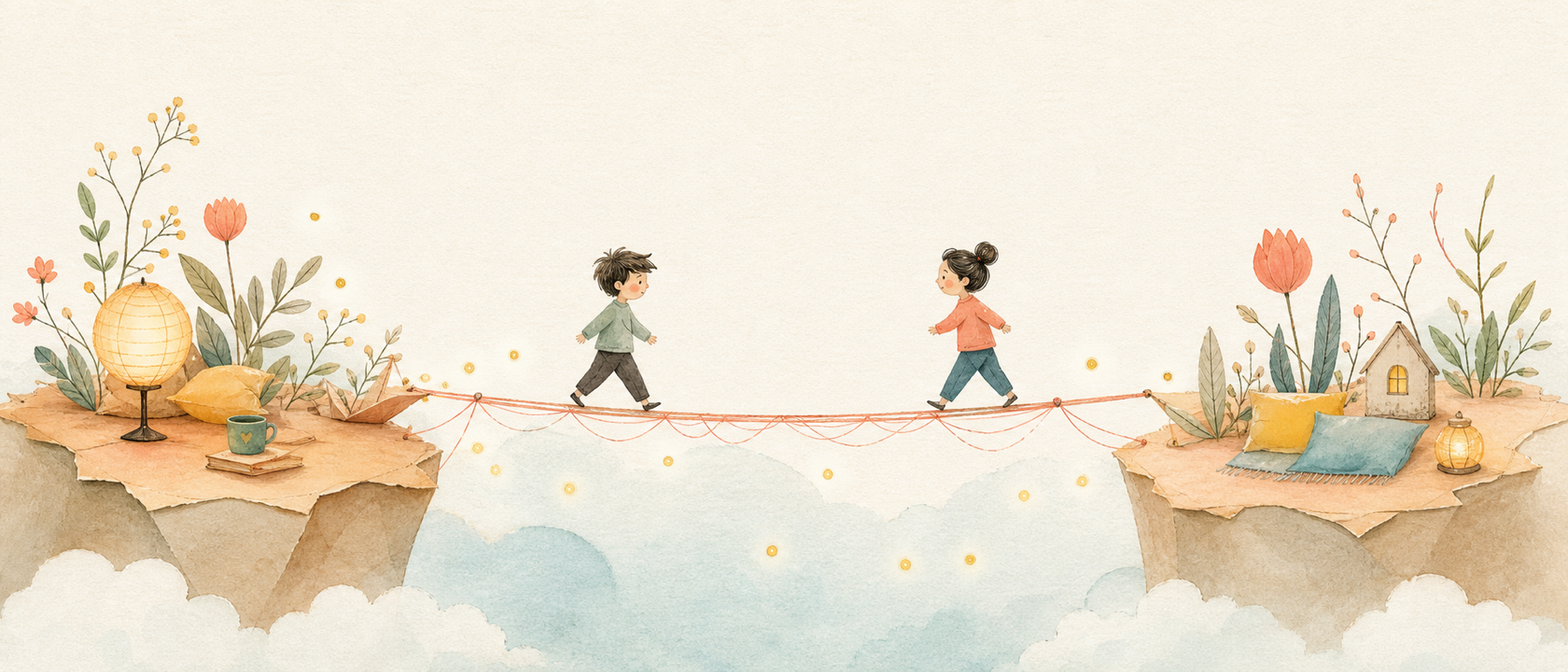
The relationship feels fragile because it is fragile — it has not been tested. This can make you feel like you are walking a tightrope, careful not to say the wrong thing, aware that the whole thing could come undone before it has really begun.
Rehearsing the breakup that has not happened
You find yourself mentally preparing for the conversation where they say it is not working. You have already imagined how you would respond. This is your brain trying to protect you from being caught off guard — but it also means you are spending emotional energy on a loss that may never occur.
Needing reassurance, and then needing it again
They tell you they like you. You feel better for an hour. Then the doubt returns. The reassurance does not hold because the anxiety is not really about information — it is about a feeling that keeps regenerating. This pattern is explored in more depth in what relationship anxiety feels like.
Questioning your own feelings
Sometimes new relationship anxiety turns inward. Instead of worrying whether they like you, you fixate on whether you like them enough, whether your feelings are real, whether you are just caught up in something temporary. This is a specific, disorienting version of the anxiety — and it is more common than people realise.
Feeling stuck in a loop that you can not seem to think your way out of?
Mindfulmate can help you slow it down and get some perspective — available any time, with no appointment needed.
How to Calm New Relationship Anxiety
Slow down the interpretation
Not every signal is data. A late reply usually means they are busy. A shorter message usually means they are tired. Your brain is trying to extract certainty from ambiguous information, which is a task it cannot complete — because the information is genuinely ambiguous. When you notice yourself building a case from small signals, try naming it: I am interpreting. This is not a fact.
Let the relationship develop without testing it
Anxiety often pushes people to seek proof — to send a message just to see how fast they reply, to say something provocative to see if they stay, to pull back slightly to see if they notice. These tests rarely give you the certainty you are looking for, and they can change the dynamic you are actually trying to protect. Learning how not to overthink in a relationship starts with recognising when you are looking for reassurance in the wrong places.
Build enough life outside this relationship
When a new relationship becomes the primary source of meaning and emotional regulation, its temperature affects everything. A slow reply becomes a crisis. Every date carries enormous weight. Maintaining friendships, interests, and routines outside the relationship gives you a more stable base — and makes the uncertainty of the early stage less destabilising.
Share what you are feeling, at the right moment
You do not need to disclose everything immediately. But keeping the anxiety entirely private means it grows in the dark. When the relationship reaches a point where it feels right, naming it simply — I tend to get anxious in the early stages of relationships and I am working on it — can relieve the pressure and deepen the connection. This is different from using sharing as a route to reassurance. It is an honest piece of information about yourself, offered when the time is right.
Accept that some uncertainty is just the cost of being new
The anxiety, in part, will resolve itself — not because you fix it, but because the relationship builds history. Shared experiences accumulate. Patterns become clear. The person in front of you becomes knowable. That takes time, and there is no shortcut. Some of what you are feeling is the discomfort of a situation that has not yet resolved, and the only way through it is forward. For more on managing the day-to-day of this, see how to cope with anxiety in a relationship.
When New Relationship Anxiety Needs More Attention
There is a version of new relationship anxiety that is uncomfortable but manageable — and a version that starts to take over. If the anxiety is stopping you from being present with the person you are dating, if it is driving behaviour you later regret, or if it is following you from one new relationship to the next, that is worth taking seriously.
A recurring pattern across different relationships usually points to something rooted before this relationship began — a way of relating to closeness that formed earlier in your life. How anxiety affects relationships goes into more detail on how that plays out over time.
Getting support does not mean something is wrong with you. It means you are choosing to understand a pattern rather than repeat it.
What to Take Away
New relationship anxiety makes sense. It is what happens when you care about something that has not yet been secured, when your history gets activated by new closeness, and when your nervous system cannot tell the difference between excited uncertainty and threatening uncertainty.
The feelings are real. The stories they generate are not always accurate.
A few things worth holding onto:
- Early-stage anxiety is common and does not mean the relationship is wrong.
- The uncertainty is genuine — and it will reduce as the relationship builds history.
- Seeking reassurance relieves the feeling briefly but feeds the cycle over time.
- Small shifts — slowing down interpretation, building your own life, naming the pattern — accumulate into real change.
- If the anxiety is following you from relationship to relationship, support is available and worth seeking.
If you are unsure where to start, the free self-assessment is a private, no-pressure way to get a clearer picture of what is happening for you.
Ready to talk through what you are feeling?
Start a private conversation in the chat app you prefer — judgment-free, confidential, and available whenever you need it.
Mindfulmate provides emotional support and guidance for everyday stress and anxiety. It is not a substitute for professional mental health treatment. If you are in crisis or need urgent support, please contact a qualified mental health professional or emergency services.