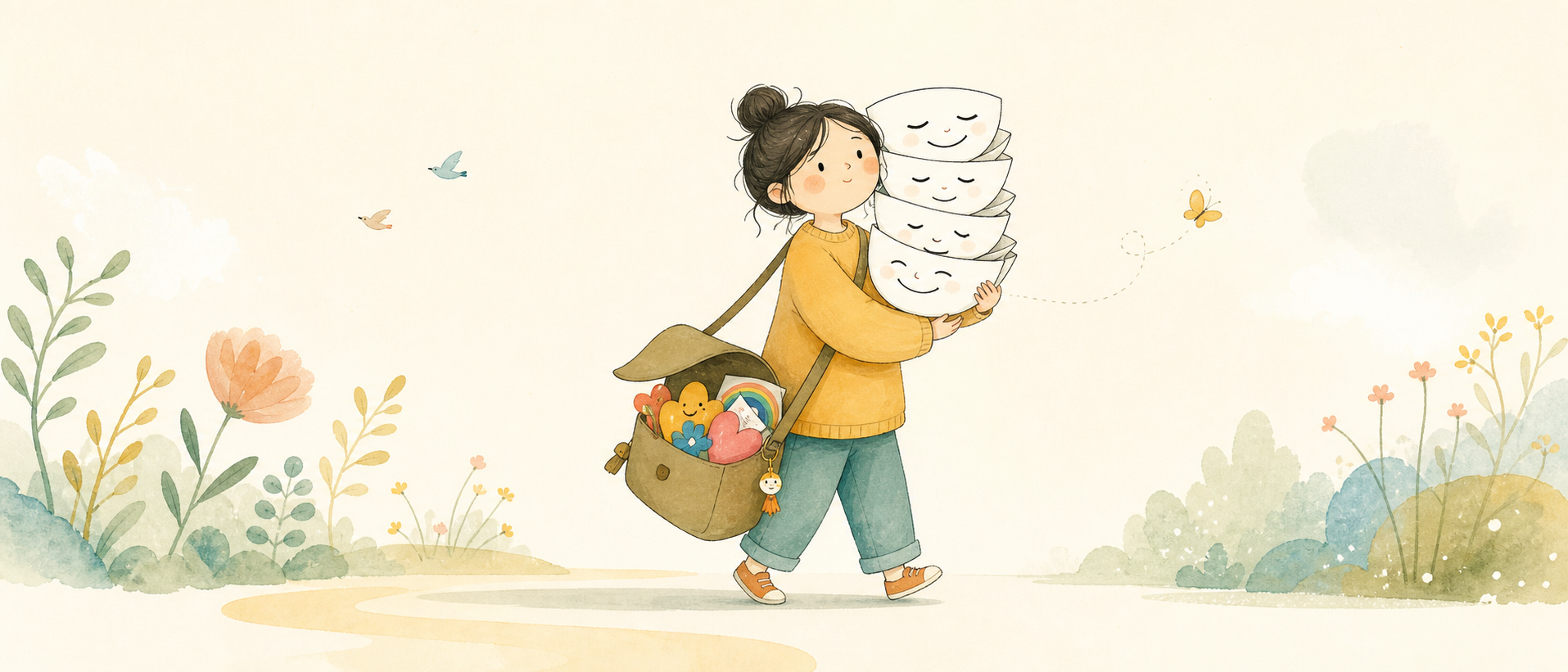
The signs of a people pleaser are not always obvious. People pleasing can look like being kind, flexible, reliable, or easy to love. You may be the person who helps, agrees, smooths things over, and rarely asks for much.
But if those choices leave you anxious, resentful, invisible, or disconnected from what you actually want, something else may be happening.
People pleasing is not kindness. It is kindness mixed with fear. Fear of conflict. Fear of disappointing someone. Fear that your needs will make you harder to love.
This guide will help you spot the pattern without turning it into another reason to criticize yourself.
If several of these signs feel familiar, start with clarity, not self-blame.
The free self-assessment can help you understand the pattern behind the pressure to please.
Kindness vs People Pleasing
Kindness is a choice. People pleasing is a strategy.
When you are being kind, you can still feel yourself in the decision. You may compromise, help, or show up for someone, but your yes feels honest.
When you are people pleasing, your yes often feels pressured. You are not only helping someone. You are trying to prevent a reaction, earn approval, avoid guilt, or keep connection from feeling at risk.
A simple difference:
| Kindness | People pleasing |
|---|---|
| "I want to help." | "I have to help or they will be upset." |
| You can say no when needed. | No feels dangerous or selfish. |
| You still know what you want. | Your needs disappear under pressure. |
| You feel connected after helping. | You feel resentful, tired, or unseen. |
The problem is not that you care. The problem is when caring requires you to disappear.
Sign 1: You Say Yes Before Checking With Yourself
One of the clearest people pleaser traits is the automatic yes.
Someone asks for help, and your answer comes out before you have checked your time, energy, or desire. You may even feel your body say no while your mouth says, "Sure, no problem."
This can happen anywhere:
- A coworker asks you to take on one more thing.
- A friend asks for support when you are already drained.
- A family member expects you to adjust your plans.
- A partner wants something you are not ready to give.
The first repair is not a perfect no. It is a pause:
Let me check and get back to you.
That sentence gives you time to find your real answer.
Sign 2: You Feel Responsible for Other People's Emotions
Do you feel anxious when someone sounds disappointed? Do you rush to fix their mood even when you did not cause it?
People pleasers often treat other people's discomfort as an emergency. A sigh, a short reply, a quiet pause, or a frustrated look can feel like a problem you must solve.
There is care in that. But there may also be over-responsibility.
Someone's disappointment can be real without being yours to fix. Someone can have a feeling about your boundary without that feeling becoming proof that your boundary was wrong.
This is one reason people pleasing can overlap with reassurance seeking. If you often replay conversations or check whether someone is upset, read how to stop seeking reassurance in a relationship.
Sign 3: You Apologize When You Have Not Done Anything Wrong
People pleasers often apologize for existing too loudly.
You may apologize for:
- Taking time to reply.
- Asking for clarification.
- Having a preference.
- Saying no.
- Needing rest.
- Changing your mind.
- Bringing up a problem.
Apologies are useful when repair is needed. But if you apologize every time you have a need, the apology quietly teaches you that your needs are injuries to other people.
Try replacing unnecessary apologies with direct language:
- Instead of "Sorry, can I ask something?" try "Can I ask something?"
- Instead of "Sorry, I cannot make it" try "I cannot make it this time."
- Instead of "Sorry for being annoying" try "Thanks for talking this through with me."
If the thought underneath is "I should not need anything," the guide to should statements can help you challenge that rule.
Sign 4: You Hide Your Preferences to Avoid Conflict
People pleasing does not always look dramatic. Sometimes it sounds like:
- "Whatever you want."
- "I do not mind."
- "Either is fine."
- "You choose."
Those phrases are not always a problem. Sometimes you truly do not care. But if you use them because having a preference feels risky, the pattern is worth noticing.
Small hidden preferences add up. You do not choose the restaurant. You do not say which weekend works better. You do not admit that a joke hurt. You do not share that you want more support.
Over time, other people may not know the real you as well as you think they do. They know the version of you that adapts.
Sign 5: You Over-Explain Simple Boundaries
People pleasers often treat boundaries like court cases. Every no needs evidence. Every limit needs a defense.
You may say:
I am so sorry, I know this is inconvenient, and I feel awful, but I had this thing come up, and I hope you understand, and I promise I am not trying to be difficult…
The message underneath is: Please approve of my no so I can feel safe having it.
A cleaner boundary might be:
I cannot make it tonight. I hope it goes well.
Short does not mean cold. It means clear.
Sign 6: You Feel Resentful After "Being Nice"
Resentment is one of the most useful signs of people pleasing.
It often shows up after you agreed to something that did not feel honest. You may tell yourself you were just being nice, but later you feel irritated, used, or unseen.
Resentment does not mean you are a bad person. It is information. It may be telling you:
- You said yes when you wanted to say no.
- You gave more than you had.
- You expected someone to notice a need you never named.
- You are confusing being loved with being useful.
Instead of shaming the resentment, ask what it knows.
Sign 7: You Replay Conversations Looking for Signs People Are Upset
After a conversation, do you scan for mistakes?
Did I sound weird? Did they seem annoyed? Should I text again? Were they quieter than usual?
This sign sits close to anxiety and reassurance seeking. The goal is often to make sure the relationship is still safe before your body will relax.
If this pattern shows up in romantic relationships, needing constant reassurance may explain why the relief never lasts.
Sign 8: You Do Not Know What You Want Until Someone Else Decides
People pleasing can make preferences harder to access.
If you have spent years checking the room before checking yourself, your own wants may feel quiet or blank. You may not know what you want until someone else says what they want, and then your answer forms around theirs.
Try this prompt:
What would I choose if no one were disappointed?
You do not have to act on the answer immediately. Just hearing it is a start.
What These Signs Cost Over Time
People pleasing may keep the peace today, but it often costs more later:
- Resentment builds.
- Self-trust weakens.
- Relationships become less honest.
- Anxiety gets louder.
- Rest starts to feel selfish.
- You become known for capacity you do not actually have.
If you want the fuller cost picture, read the danger of being a people pleaser.
A Quick Self-Check
If you are unsure whether a specific yes came from kindness or people pleasing, ask yourself three questions:
- Would I still choose this if I knew they would not be disappointed?
- Am I saying yes because I want to, or because I need the tension to go away?
- Will I feel closer to this person after helping, or quietly resentful?
You do not need perfect answers. The point is to slow the moment down long enough to notice whether you are choosing freely.
What to Do If These Signs Sound Familiar
Do not try to overhaul your whole personality this week. Start smaller.
Choose one:
- Pause before saying yes.
- Name one real preference.
- Replace one apology with a direct sentence.
- Let one person be mildly disappointed without rushing to fix it.
- Take the people pleaser test to see where the pattern is strongest.
Then read how to stop people pleasing for the practical next steps.
Need help sorting out what you actually want before you answer someone?
Mindfulmate gives you a private, judgment-free place to slow down, reflect, and practice a steadier response.
Mindfulmate provides emotional support and guidance for everyday stress and anxiety. It is not a substitute for professional mental health treatment. If you are in crisis or need urgent support, please contact a qualified mental health professional or emergency services.